
Village Museums vs. Open-Air Heritage Walks: Which Fits Your Visit?
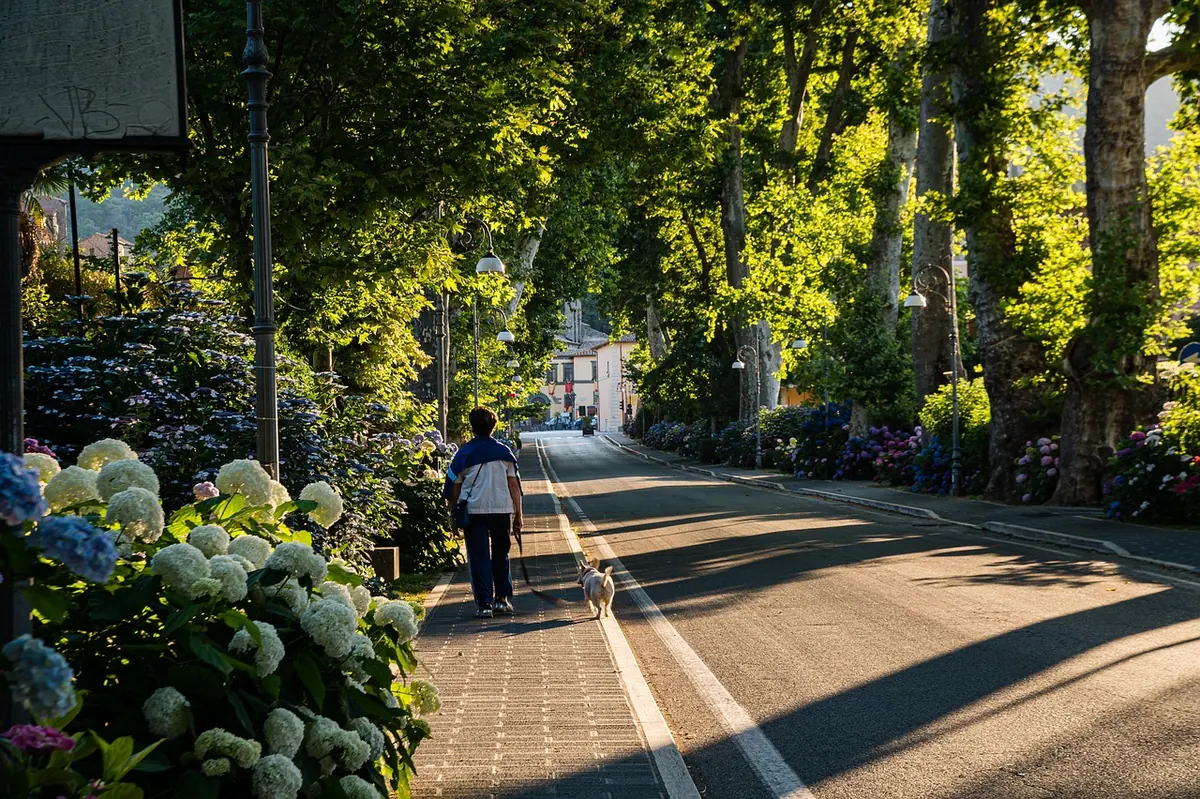
Most villages keep two doors open onto their past, and only one of them has a doorknob. The first is the small museum — often a single room in a former school, rectory or stable — where the fragile things live: a wedding veil, a miller's ledger, a set of cooper's tools. The second is the village itself, walked at an unhurried pace with a map that may be photocopied and slightly out of date. Both tell the same story from different angles. Choosing between them takes ten minutes of honest self-assessment and can save you a morning you would rather have spent differently.
What an Indoor Village Museum Does Well
Small museums are usually run by volunteers who grew up with the objects on display. That shows in the best way: someone will notice you lingering over a wooden yoke and tell you which slope it came from, and who last used it. Opening hours are a negotiation with real life — three afternoons a week, sometimes fewer in winter — so check before you build a day around one.
The great strength of the format is interpretation. A room of well-chosen objects can explain an entire local economy in twenty minutes: chestnuts and charcoal, olives and oil, hemp, wool, fishing, seasonal migration with the herds. You see the tools, the account books, the photographs of the same square you walked through an hour ago, and the pieces click together. The context is handed to you.
What you will typically find inside
- Agricultural and craft tools, often with the owner's initials burned into the handle
- Parish registers, confraternity banners and a case of devotional objects
- Family photographs, school exercise books and wartime letters
- Textiles — trousseau linen, lace, working aprons — kept out of the light for good reason
- A scale model of the old town, usually the most useful thing in the room
The limits are real too. Four walls cannot show you the terraces those tools were carried up. Labels are frequently in Italian only, and lighting is often dim to protect the paper. And a museum can accidentally make a working farming town feel like a cabinet of curiosities, tidy and finished. It is not finished; it is simply indoors.
What a Self-Guided Heritage Walk Does Well
A heritage walk is any route that takes you past the things a village cannot put in a case: the washhouse below the square where water still runs, the mill on the stream, the chapel on the ridge, a stretch of mule track paved with river stones, the terraces now half-wild with broom.
Walking teaches scale in a way no panel can. You feel the hill because you climb it. You understand why the old houses face the way they do once you have stood in the August sun and looked for shade. You notice that the church was built with stone recycled from something older, and that the lane narrows exactly where two families once quarrelled over a boundary.
The trade-off is that nobody explains any of it. Signage can vanish without warning, summer growth can swallow a path, and a route that looked simple on paper may end at a locked gate. Do a short read beforehand — even fifteen minutes — and the walk repays you tenfold.
Good things to look for on foot
- Kilometre markers, date stones and carved lintels on doorways
- Public washing places, fountains and communal bread ovens
- Boundary crosses, small shrines and roadside chapels
- Dry-stone retaining walls — the shape of the wall hints at its age
- Doors left deliberately ajar in the older lanes, and the smell of woodsmoke in autumn
Which One Fits Your Interests
Choose the museum when you want the story told, when the weather has turned, when you are travelling with someone who cannot manage uneven ground, or when you have an hour and no more. Small museums are also excellent with children if you give them a task: find the oldest object, find the object with a name on it, find the photograph of this street.
Choose the walk when you want the place itself rather than a commentary on it, when you have a half-day and decent shoes, or when you have already seen three museums this week and another glass case would blur into the last one. Walks are better for photographers, for people who like to stop without explanation, and for anyone who would rather remember a view than a vitrine.
Time, Weather and Stamina
Be honest about your constraints before you commit. A village museum rarely takes more than 45 minutes; a heritage walk, even a short one, eats two hours with stops. Heat changes the plan: in July and August, walk before ten and save the indoor hour for the middle of the afternoon. Rain reverses it — though check first, because many small museums close without notice and a wet walk through stone lanes can be splendid if you have the right jacket.
Ask about gradients. Villages on a hill offer beautiful routes and unforgiving ones, and the difference is usually the direction you walk them. The volunteer at the museum desk is often the best source of a route: mention how long you have and how far you want to go, and you may leave with a pencil line drawn on a photocopied map. That map is worth more than most guidebooks.
Doing Both Without Wearing Yourself Out
The order matters more than you would expect. Museum first, walk second: forty-five minutes among the objects gives you names for things, and names make you notice them on the street. You will spot the frantoio because you saw the millstone, and recognise the washhouse because a photograph showed thirty women around it.
The reverse also works, for a different reason. Walk in the cool of early morning while the village is still quiet, then sit in the museum afterwards and let the pieces settle. Either way, keep the total under four hours. A short visit remembered well beats a long one endured.
Before You Choose: A Short Checklist
- Check the museum's opening days and hours the day before, not the week before.
- Ask whether any printed material exists in English, even a single laminated sheet.
- Look at the route profile, not just the distance — 3 km uphill is a different afternoon from 3 km on the flat.
- Carry water, and wear shoes with tread; cobbles are slippery when damp.
- Start the walk from the tourist office or bar, where someone will notice if you are gone too long.
If you only have a single morning, take the walk and leave the museum for the next visit — it will still be there, and it will mean more once you have climbed the hill yourself.
Photo: MARTINOPHUC / Pixabay